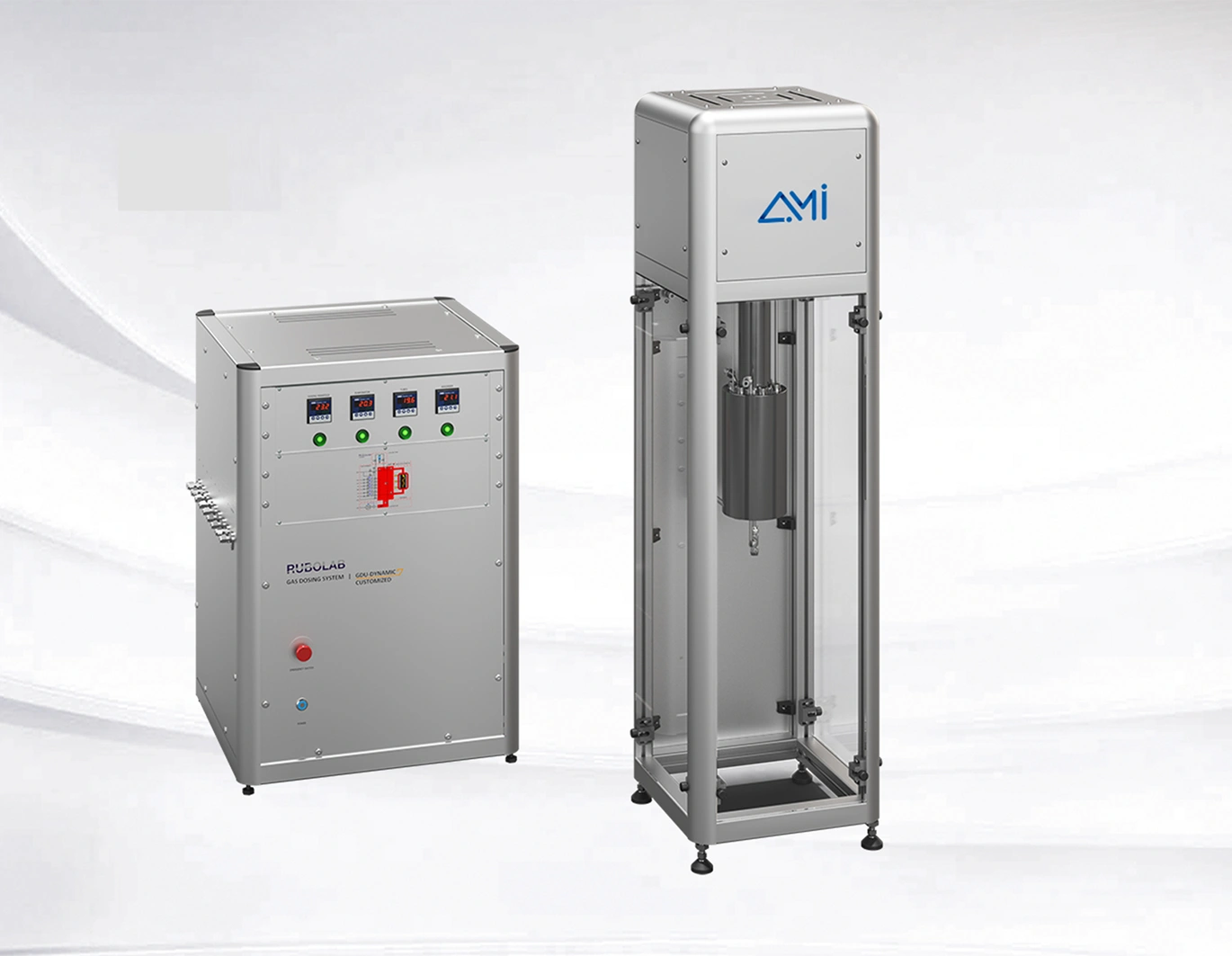
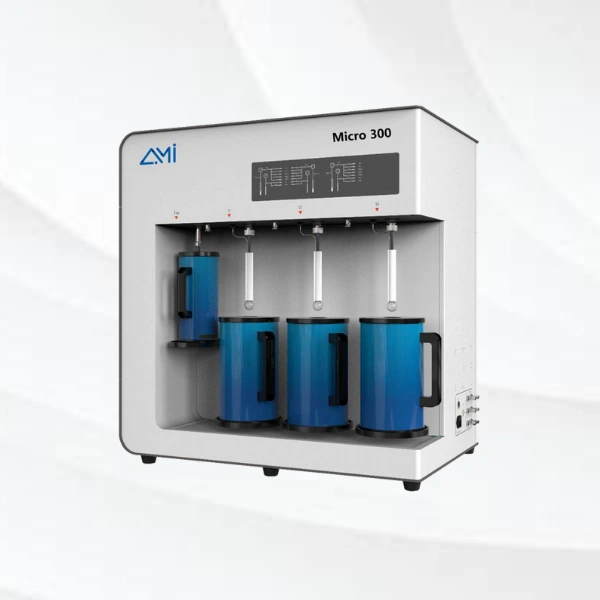
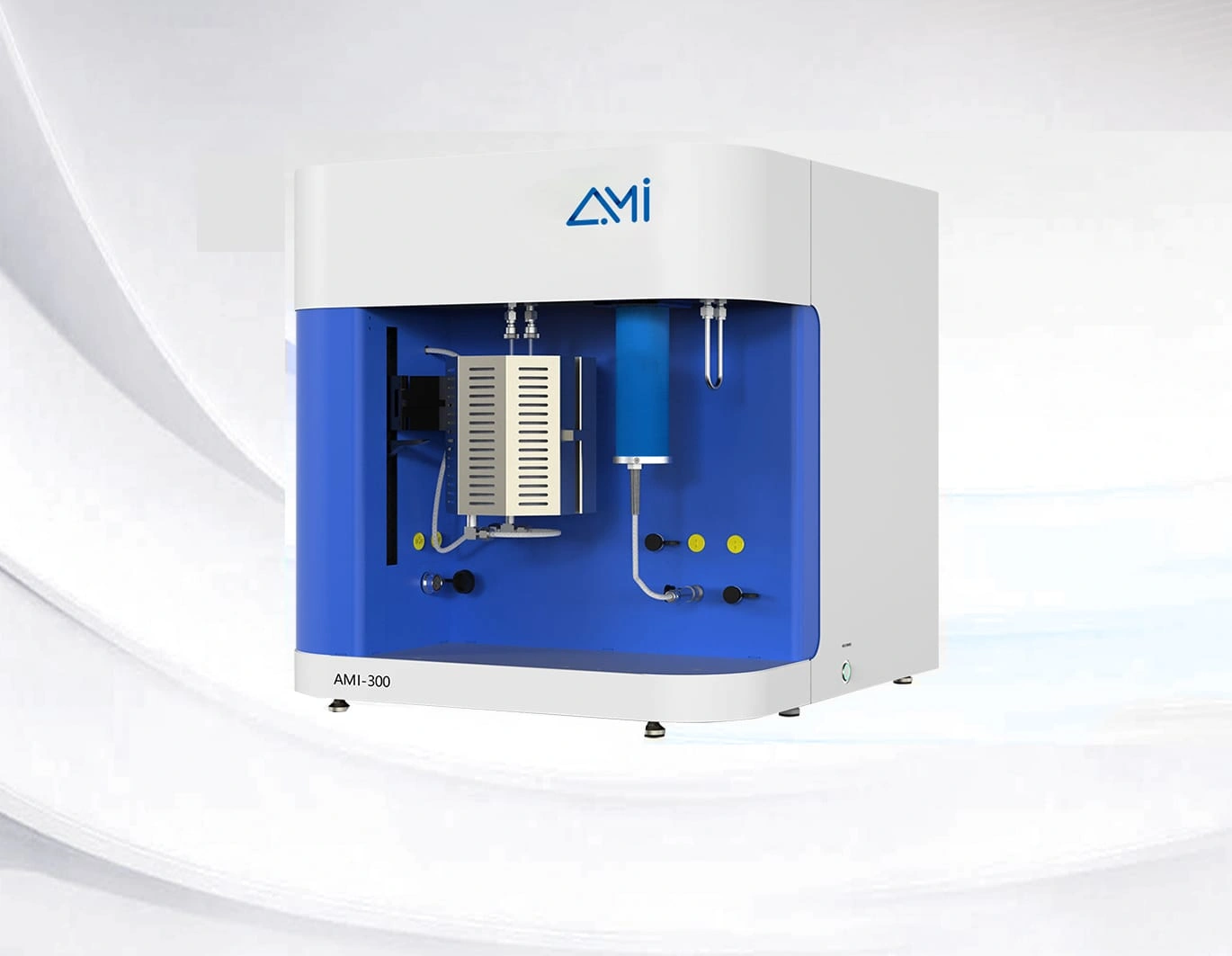
Magnetic suspension balance. Gravimetric sorption in real-world conditions. Dual-sample testing, up to 400°C.
● Semi-standardized reactor system, fullyconfigurable: gas ports, temperature and pressure
● Supporting up to 6 gas feeds and 2 liquid feeds
● Up to 1200°C and 100 bar (customizable for higher)
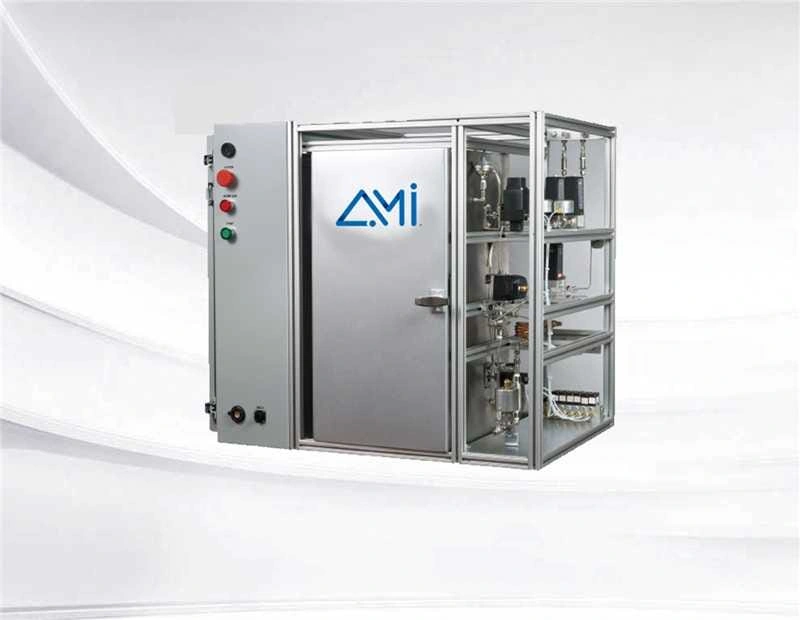
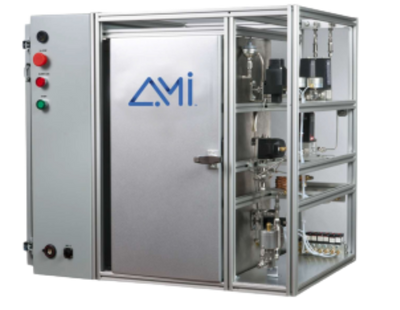
The μBenchCAT by Advanced Measurement Instruments (AMI) is a fully integrated, bench-top reactor system designed for comprehensive catalytic studies. Engineered for both gas-phase and liquid-phase reactions, it combines all essential components into a compact, automated platform—ideal for academic, industrial, and R&D environments.
With a variety of configurable options, the μBenchCAT offers exceptional flexibility, making it suitable for a wide range of applications, from catalyst screening and reaction kinetics to long-term stability testing and performance evaluation under real-world conditions.
Maximum Operating Temperature: up to 1200°C, depending on reactor material
Maximum Operating Pressure: up to 100bar
Gas Feed Capability: Up to 6 independently controlled gas feeds
Liquid Feed Options: Configurable for 0, 1, or 2 liquid feeds
Reactor Materials: Available in stainless steel, quartz, or Incoloy to suit a wide range of chemical and thermal environments
Wetted Materials: Durable and chemically resistant components including Stainless Steel, PEEK, Kalrez, Viton, Incoloy, and Quartz
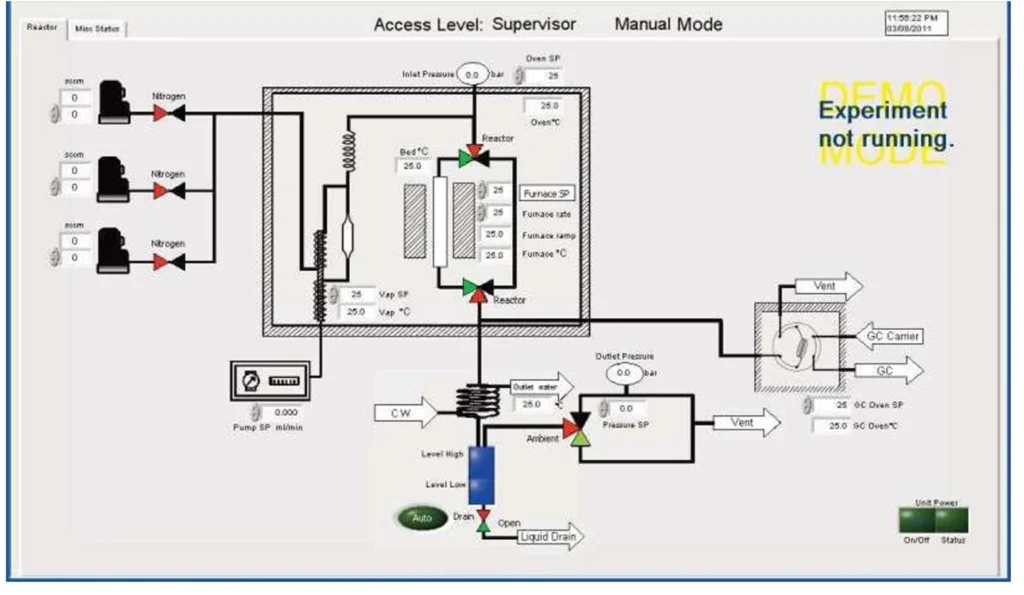
Isothermal Oven: Houses key process components in a uniformly heated environment, minimizing thermal gradients
Multi-Station Capability: Optional Dual μBenchCAT configuration allows for two stations to operate in parallel or series, enabling simultaneous or sequential experiments for enhanced productivity
Full Automation: Controlled through a LabVIEW-based interface for precise operation of temperatures, flows, valve sequences, and reactions
Redundant Safety Systems: Multiple layers of protection, including temperature safety switches, pressure relief valves, positive shut-off valves, firmware-level alarms, and software-based user alarms, ensuring safe and reliable operation
Connection to External Detectors
The μBenchCAT provides seamless integration with external analytical instruments. The product effluent can be routed to a gas chromatograph (GC) or other detectors via an optional sampling valve, available in heated or unheated configurations. This capability enables real-time product analysis and greater experimental insight.
Built-In Safety Systems
Every μBenchCAT is designed with a robust suite of hardware, firmware, and software-level safety features to ensure safe operation under demanding experimental conditions:
• Check valves in all gas and liquid feed lines prevent backflow and cross-contamination.
• Software-coded alarms continuously monitor temperatures and pressures. These alarms are configured by AMI based on system safety limits.
•User-defined alarm matrix allows operators to set custom upper and lower limits for key process parameters and define actions if thresholds are exceeded.
Built-In Safety Systems (continued)
• Hardware over-temperature safety switch protects the furnace from overheating.
• Firmware-level alarms safeguard all heating elements.
• Preset pressure relief valves prevent system over-pressurization.
• Front-mounted power switch provides immediate power cutoff in case of an emergency.
• Double fusing is included in all 220 VAC process equipment for added electrical protection.
These layered safety features ensure that the μBenchCAT can be operated confidently in both routine and advanced catalytic studies.
The μBenchCAT is fully automated to ensure ease of operation, process reliability, and repeatability. Designed for unattended operation, it allows users to configure experiments with minimal manual intervention. The operator simply inputs a sequence of process parameters and control steps, schedules a start time, and the system handles the rest.
All key functions—including valve positions, flow rates, temperatures, pressures, and product sampling—are automatically controlled by the system’s operating software. Data readback is performed at a user-defined sampling rate, and all data are saved in a text-delimited format for easy import into external software platforms for further analysis or reporting.
Control and data acquisition are managed through a dedicated LabVIEW-based application, developed specifically for the μBenchCAT. This software provides intuitive control logic, real-time visualization of system status, and complete experiment tracking, making the μBenchCAT a powerful tool for both routine and advanced catalytic research.
The μBenchCAT software includes three distinct user access levels, allowing controlled operation and protection of critical system settings:
• Locked-Out Mode: This mode is intended for security or safety scenarios where system access must be fully restricted. In this mode, no control actions or changes can be made until authorized login credentials are provided.
• Operator Mode: Designed for routine users, this mode allows access to day-to-day functions such as loading saved procedures, starting/stopping experiments, adjusting basic run parameters, and viewing real-time data. Critical system configurations and calibration settings remain protected.
• Supervisor Mode: This mode provides full access to all system settings, including calibration routines, gas configurations, user management, method creation/editing, and advanced diagnostics. It is intended for experienced users responsible for system setup, maintenance, and high-level customization
The μBenchCAT is engineered for high-performance catalytic testing in both gas- and liquid- phase environments. All core components are integrated into a compact, bench-top system, delivering precision, flexibility, and ease of use.
Reactor Feed System
The standard configuration supports up to 6 gas feeds and 2 liquid feeds. Each gas line includes a filter, electronic mass flow controller (MFC), check valve, and positive shut-off valve. The range and gas calibration of each MFC are specified by the customer to meet application requirements. Liquids are delivered via high-precision HPLC pumps (or liquid flow controllers), ensuring accurate and stable flow control.
Heated Isothermal Oven
An isothermal oven, operating up to 200°C, houses most process components to maintain a uniform thermal environment. This design minimizes condensation and ensures thermal stability throughout the system. Components located in the oven include:
• Integral gas preheater and liquid preheater/vaporizer, operable up to 300°C
• Feed mixer for combining gas and vapor streams
• Reactor by-pass valves for process flexibility
• Reactor furnace with control and safety thermocouples
• Reactor, equipped with an internal sample thermocouple for accurate temperature measurement
Condenser
A tube-in-tube condenser, located downstream of the reactor and outside the oven, ensures effective removal of condensable components. A thermocouple monitors the coolant return temperature, helping maintain thermal consistency and system stability.
Gas/Liquid Separator
Positioned after the condenser, the gas/liquid separator ensures efficient phase separation.Standard configuration includes high- and low-level switches to activate an automatic drain valve.An optional capacitance liquid level sensor is also available, offering continuous, precise liquid level monitoring for advanced level control and long-duration automation.
Pressure Control
Reactor exit pressure is measured via a dedicated pressure transducer. A high-turndown pressure control valve is used to build and regulate system pressure, enabling steady-state operation under pressurized conditions across a wide pressure range.
Product Sampling Valve (Optional)
An optional product sampling valve can route reactor effluent directly to an external analytical device, such as a gas chromatograph or mass spectrometer, enabling real-time product analysis and enhanced experimental insight.
| Category | Option | Code |
|---|---|---|
| A. Number of Gases | 0 | G0 |
| 1 | G1 | |
| 2 | G2 | |
| 3 | G3 | |
| 4 | G4 | |
| 5 | G5 | |
| 6 | G6 | |
| B. Number of Liquids | 0 | L0 |
| 1 | L1 | |
| 2 | L2 | |
| C. Pressure / Temperature | ATM / 1200°C | 0 |
| 50 bar / 650°C | 50 | |
| 100 bar / 650°C | 100 | |
| 100 bar / 800°C | 1008 | |
| D. Reactor OD | 0.25 in | 250 |
| 0.375 in | 375 | |
| 0.5 in | 500 | |
| 0.75 in | 750 | |
| E. Reactor Material | Quartz | Q |
| 316 Stainless Steel | S | |
| Inconel | I | |
| F. Gas / Liquid Separator | No | 00 |
| Yes | 01 | |
| G. GC Sampling Line | None | 00 |
| Unheated After Pressure Reduction | 01 | |
| Heated slip-stream | 02 | |
| Example | μ-G3-L1-0100-375-S-01-00 | |