
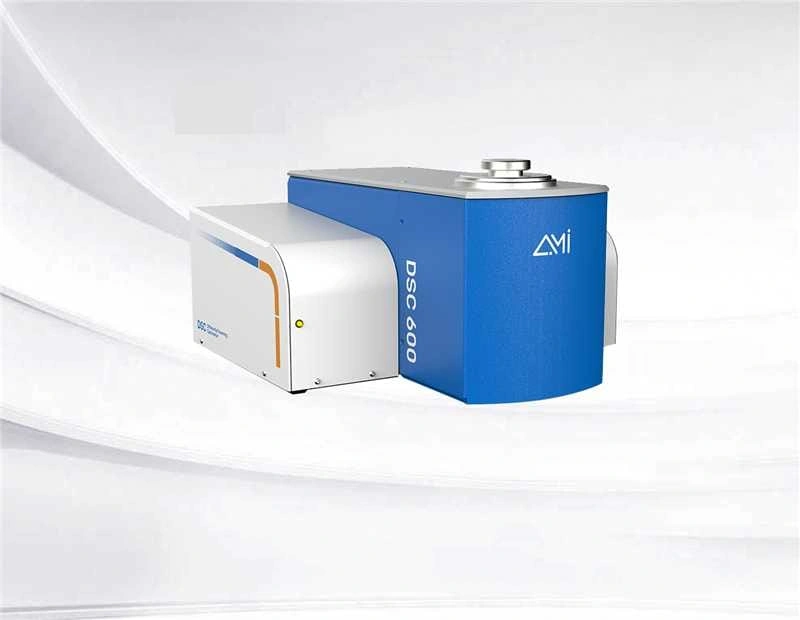
DSC 600

● Flexible cooling systems: water, mechanical, or liquid nitrogen (LN2).
● Ultra-light mineral furnace design reduces heat loss and enhances thermal uniformity.
● Optional high-pressure DSC model supports measurements up to 1000 psi.

Product Overview

Introduction

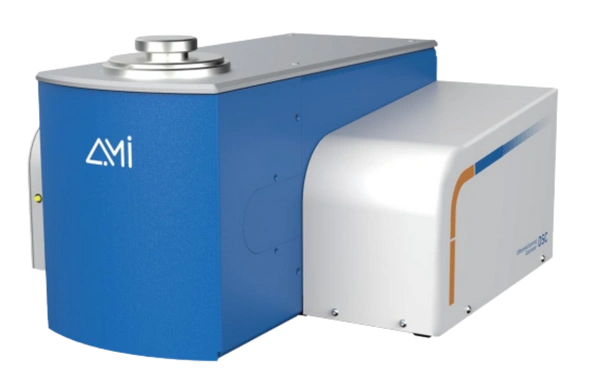
The DSC 600 from Advanced Measurement Instruments (AMI) is the next generation of Differential Scanning Calorimeters (DSC), crafted to meet the evolving needs of professionals in materials research, chemical engineering, quality control, petrochemicals, and pharmaceuticals. Designed for precision, reliability, and affordability, the DSC 600 sets new standards in thermal analysis.

At the heart of the DSC 600 is its innovative heat flux plate, engineered to capture the smallest energy changes with unmatched sensitivity and accuracy. This powerful capability enables precise measurements across a broad spectrum of applications, including enthalpy, glass transition, heat of crystallization, purity determination, and heat capacity.

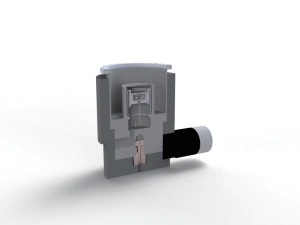
Equipped with an ultra-light furnace, the DSC 600 ensures excellent thermal conductivity and stability, delivering consistent performance across a wide temperature range. With a selection of specialized heat flux plates, it can be tailored to meet diverse testing needs,enhancing efficiency and flexibility in every lab.

Typical Applications

– Melting Temperature

– Crystallization Temperature

– Heat of Chemical Reaction

– Glass Transition Temperature

– Specific Heat Capacity

– Degree of Crystallinity

– Degree of Cure

– Oxidative Stability

– Thermal Stability

– Solid-State Phase Transition

– Liquid Crystal Phase Transition

– Aging of Materials

– Polymorph
Features

Precision

High-sensitivity heat flow sensor platform delivers calorimetric accuracy of ±0.1%. With four distinct heat flow sensor types available, it comprehensively meets the precise measurement needs of diverse materials, accommodating a wide range of experimental and application scenarios.

Featuring innovative furnace technology and unique sensor design, the system achieves exceptional baseline repeatability while offering low noise, high sensitivity, and outstanding resolution. This ensures the detection of even minute thermal changes that might otherwise be lost in noise.

Stability

The mineral-insulated furnace body design combines excellent thermal conductivity with corrosion resistance, while dual-PID temperature control ensures data accuracy and stability.

Advanced circumferential heating technology and a proprietary dual-PID control system guarantee precise adherence to programmed temperature profiles during both heating and cooling phases. With temperature control accuracy of ±0.01°C, the system significantly minimizes thermal fluctuations that could compromise experimental results.

Ease of Use

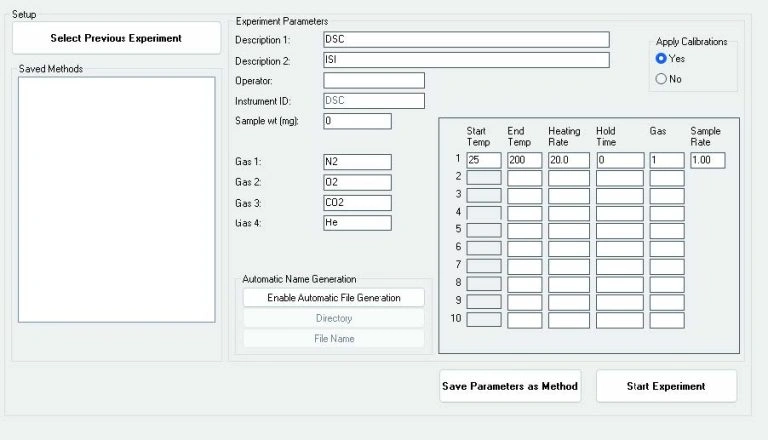
The intuitive software interface features streamlined UI and modular architecture, enabling effortless operation. Researchers can quickly master experimental setup, data analysis, and all critical workflows.

The maintenance optimized furnace design allows easy cleaning even after sample contamination during loading, significantly enhancing experimental efficiency while extending equipment service life.

High-Precision Heat Flow Sensor

The self-developed high-sensitivity heat flow sensor platform delivers low noise, high sensitivity, and exceptional resolution to reliably detect minute thermal variations that might otherwise be obscured by noise.

Four Types of Heat Flow Sensors

The DSC600 offers four types of heat flow sensor platforms: standard testing type, high-sensitivity type (for biopharmaceutical materials), corrosion-resistant type (for corrosive samples), and energetic materials type (for chemical reactions). These sensors meet the requirements of different application scenarios and sample types.

Precision Temperature Control

The system utilizes circumferential heating technology and a proprietary dual-PID control system to ensure exact adherence to programmed temperature curves during heating/cooling processes. With a temperature control accuracy of ±0.01°C, it effectively minimizes thermal fluctuations that could compromise experimental results.

Ultralight Mineral Furnace

The silver-constructed furnace body delivers exceptional thermal conductivity and stability, ensuring precise temperature control and rapid thermal response. The pure silver material effectively minimizes heat loss while enhancing analytical efficiency, achieving uniform heating/cooling across samples. Its superior corrosion resistance extends instrument service life, accommodating diverse experimental environments.

Automatic Gas Switching Control

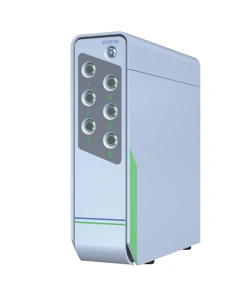
The multi-channel gas inlet device enables automatic gas switching during experiments. This integrated unit combines four or six gas lines into a single module to meet the demands of frequent gas changes across different testing procedures.

Gas Preheating Function

The furnace incorporates heated gas lines at the inlet ports, enabling gas preheating before entering the sample chamber. This design stabilizes experimental conditions and enhances testing efficiency.

Three High-Efficiency Cooling Systems

The DSC 600 is equipped with three high-efficiency cooling systems, offering versatile refrigeration options: water bath cooling, mechanical refrigeration, and liquid nitrogen cooling.

The water bath cooling system regulates furnace temperatures from 10°C to 600°C, ideal for scenarios not requiring cryogenic conditions, such as polymer melting point and crystallization temperature analysis. The mechanical refrigeration system covers a temperature range of -90°C to 450°C, widely used in polymer material analysis, including glass transition studies, crystallization kinetics research, and conventional low-temperature testing applications.

The liquid nitrogen cooling system utilizes the endothermic properties of evaporating liquid nitrogen for rapid cooling, with a furnace temperature range of -150°C to 600°C. It is primarily employed for ultra-low temperature research, such as metal alloy phase transitions, superconducting material analysis, and rapid quenching experiments, including amorphous material preparation and fast cooling process studies.

Software

Standard Functions

· Glass transition analysis
(2-point or 6-point method)

· Onset/peak temperature determination

· Peak integration

· Melting peak analysis

· Crystallinity measurement

· Data smoothing

· Baseline correction

Optional Functions

Specific Heat Capacity:
The system rapidly determines specific heat values by testing samples alongside reference materials with known heat capacity (e.g., sapphire) under identical conditions.

Experiment Program Setup Interface

Applications

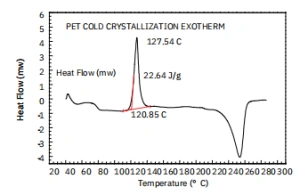
Cold Crystallization Behavior of PET

The crystal growth and degree of crystallization depend on the polymer type, cooling rate, or isothermal aging time. The calculation method for crystallization enthalpy is the same as that for melting enthalpy. Cold crystallization is the process of crystal growth during heating. This exothermic event precedes crystal melting.

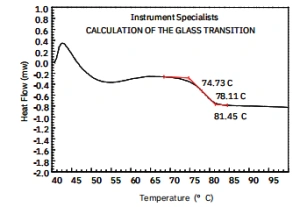
Glass Transition Analysis

The glass transition temperature (Tg) of polymers refers to the temperature range at which they transition from a rigid “glassy” state to a flexible “rubbery” state, significantly affecting their usability, particularly in elastomers. Understanding Tg is crucial for quality control, process optimization, ensuring product performance, and maintaining material consistency.

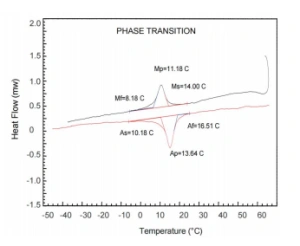
Phase Transformation of Nickel-Titanium Alloys

The Af temperature refers to the phase transition temperature of nickel-titanium alloys, marking the transformation from the high-temperature phase (a-phase) to the low-temperature phase (f-phase). In the high-temperature phase, the crystal structure of nickel-titanium alloy exhibits a cubic system, while in the lowtemperature phase it transforms into a monoclinic system. This phase transition temperature change gives nickel-titanium alloys their shape memory properties. These shape memory characteristics enable important applications across various fields, such as medical devices, aerospace, and mechanical engineering.

Specifications

Specification Option 1 Option 2 Option 3
Temperature Range -150~600°C
Temperature Accuracy ±0.1°C
Temperature Precision ±0.01°C
Program Rate 0.1~200°C/min
Cooling Mode Water Cooling Refrigerated Cooling Liquid Nitrogen Cooling
Maximum Temperature 600°C 450°C 600°C
Minimum Temperature Ambient Temperature -40°C or -90°C -150°C
Calorimetric Accuracy ±0.1%
Noise 0.5 μW
Gas Nitrogen, Argon, Helium, Compressed Air, Oxygen, etc.
Sampling Frequency 10 Hz
Weight 27 lbs.
Dimensions 17 in (W) × 17 in (D) × 9.5 in (H)
Options
Gas Controller 4 Channel Automatic Gas Switching
Software Functions Specific Heat Capacity

Materials

– Thermoplastics
– Thermosets
– Rubbers
– Catalysts
– Phenolics
– Pharmaceuticals
– Chemicals
– Coals and other fuels
– Nuclear Research
– Foods
– Cosmetics
– Explosives

Accessories

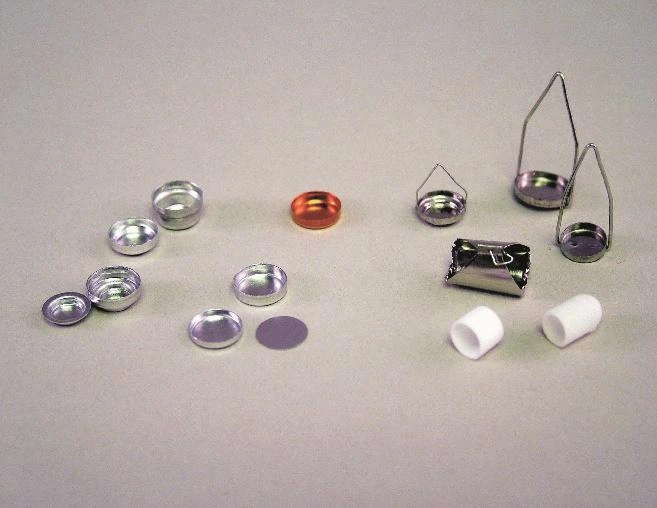
Crucibles

Crucibles serve as sample containers in thermal analysis measurements, effectively protecting sensors and preventing measurement contamination. The selection of crucible type is critical for result quality. We offer various crucible options to meet different testing requirements, ensuring accurate and reliable measurement results.

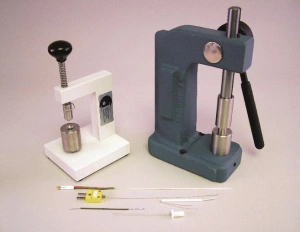
Pellet Press

The crucible pellet press elevates sample encapsulation to higher performance and convenience, suitable for routine and hermetic testing of various materials. The standard model is specifically designed for solid sample crucibles, while the universal model handles both solid and liquid sample crucibles, offering greater flexibility for your experiments.

Fully Automated Chiller

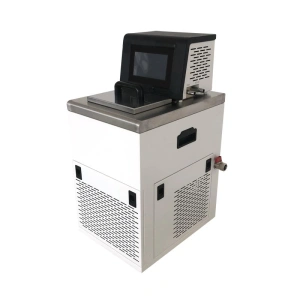
The fully automated recirculating bath enables precise continuous temperature control within the range of -10°C to 90°C. When coupled with the water-cooled DSC 600 system, it achieves rapid furnace cooling, significantly enhancing experimental efficiency.

Gas Selector Accessory

The gas selector supports one-button switching across multiple gases, accommodating up to 4 input ports. It simplifies valve disassembly and assembly when sampling different gases, effectively minimizing leakage risks associated with manual handling. Additionally, the instrument features an automatic purging process, ensuring efficient gas line purification and seamless, automated switching between gases.

Related Products