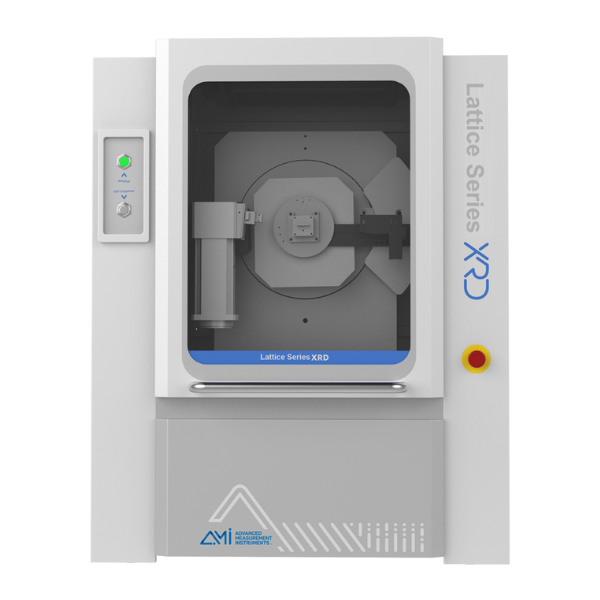
Lattice Series

● High-power X-ray diffractometer.
● Desktop XRD combines high-power X-ray & photon-counting 2D array.
● Photon-counting detector delivers lab-grade XRD in minutes.

Product Overview

Introduction

The Lattice Series redefines benchtop X-ray diffraction by combining high-power performance with compact design. Equipped with a powerful 600 W (Lattice Mini) or 1600 W X-ray source and a high-efficiency, direct-read 2D photon detector, the Lattice Series delivers exceptional data intensity and accuracy—making it ideal for demanding analytical environments.

Available in three configurations—Lattice MiniLattice Basic, and Lattice Pro—this series accommodates a wide range of technical and budgetary needs, from simple phase identification to complex in-situ studies. All models offer excellent signal-to-noise ratio and fast scan speeds, providing lab-grade data from a desktop system.

Whether you’re analyzing complex powders, crystalline materials, or conducting highthroughput measurements, the Lattice Series provides lab-grade results with speed, power, and precision—all in a desktop footprint.

Features

• High-Power X-ray Source

Choose between 600 W or 1600 W configurations for high-intensity data collection and rapid scanning.

• 2D Photon Direct-Read Detector

A 256 × 256 pixel array captures sharp, high-resolution diffraction patterns with an excellent signal-to-noise ratio.

• Exceptional Angular Accuracy

Achieve step sizes as small as ±0.01° 2θ and ensure a consistent peak matching with standard reference materials.

• Flexible Goniometer Options

Theta–2Theta geometry for standard analysis (Mini & Basic) or Theta–Theta for enhanced sample stability (Pro).

• Fast, Reliable Scanning

Obtain full-spectrum data in minutes—ideal for routine QA and high-throughput labs.

• Compact Benchtop Design

Fits seamlessly into modern lab environments without sacrificing performance or requiring floor space.

• Expandable Functionality (Lattice Pro)

Supports advanced modules for residual stress testing, high-temperature stages, in-situ battery studies, and thin film analysis.

• User-Friendly Operation

Intuitive software and streamlined hardware design simplify training and daily use.
Parameters

Specification Lattice Mini Lattice Basic Lattice Pro
Model Lattice Mini Lattice Basic Lattice Pro
X-Ray Tube Power 600 W 1600 W 1600 W
X-Ray Tube Target Material Standard Cu target, Co optional
Theodolite Theta / 2-theta, radius 158 mm Theta / 2-theta, radius 170 mm Theta / theta, radius 170 mm
Maximum Scanning Range −3° to 156°
Theta Minimum Step Size ±0.01°
Detector Photon direct-read 2D array detector
Detector Energy Resolution 0.2
Volume & Weight L 25.6 in (650 mm) × W 19.7 in (500 mm) × H 15.8 in (400 mm), 132 lbs (60 kg) L 35.5 in (900 mm) × W 26.8 in (680 mm) × H 21.7 in (500 mm), 220 lbs (100 kg) L 35.5 in (900 mm) × W 26.8 in (680 mm) × H 21.7 in (500 mm), 220 lbs (100 kg)
Sample Stage Standard chip stage
Options N/A Five-bit injector; In situ battery test accessories Five-bit injector; In situ battery test accessories; High-temp sample station (customizable up to RT–600°C / RT–1000°C); Residual stress fixture (custom); Film sample stage 2.4 in (60 mm) × 2.4 in (60 mm)

Examples

Miller Indices XRD Peak Comparison
Miller Indices Theoretical Peak Position Measured Peak Position Difference
012 25.579 25.577 0.0020
104 35.153 35.150 0.0030
116 57.497 57.497 0.0000
10̅10 76.871 76.872 0.0010
02̅10 88.997 88.996 -0.0010
01̅14 116.612 116.610 -0.0020

Comparison of Theoretical Peak Positions and Measured Peak Positions for Corundum Standard Sample

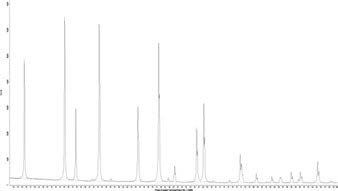
Test Data for Corundum Powder (10°/min)
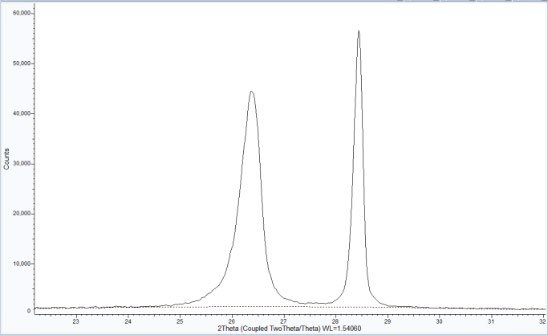
Graphitization Degree Measurement
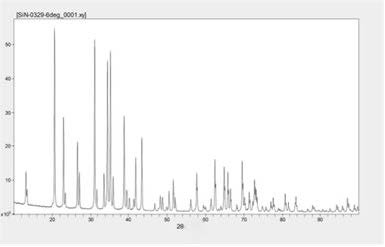
Measurement Spectrum for Silicon Nitride Ceramic
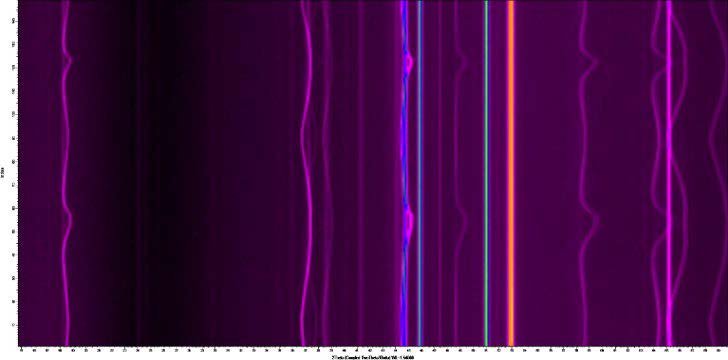
Reflective In-Situ Battery Measurements

Related Products